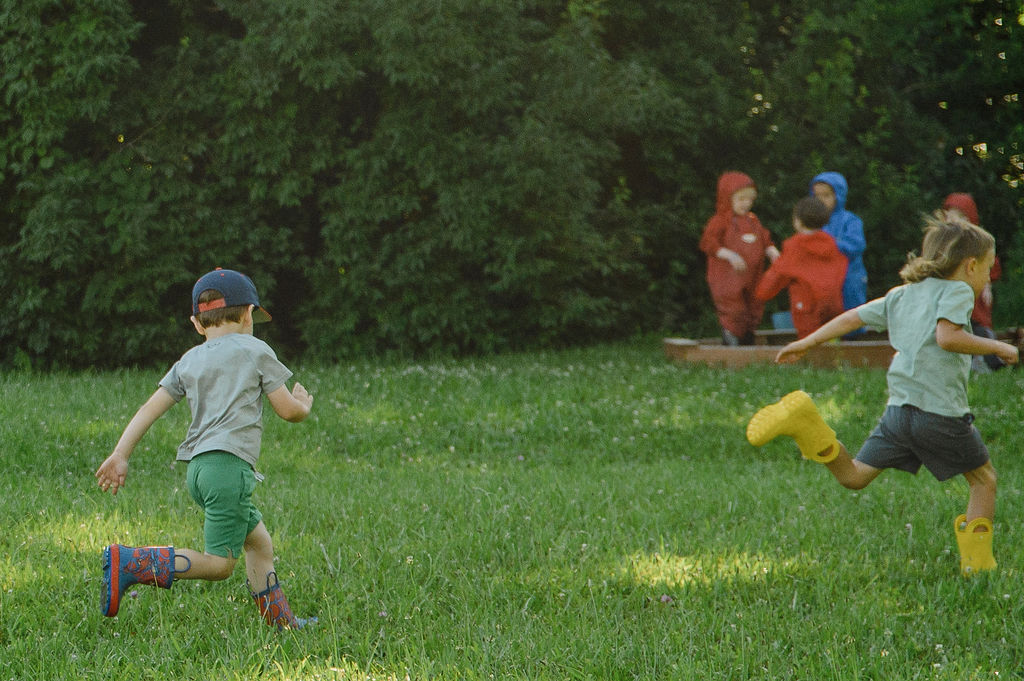
What Is Nature-Based Learning for Young Children?

Children are natural explorers. A stick can become a tool, a puddle can inspire a science experiment, and a walk through the trees can lead to questions about animals, weather, colors, movement, and change.
Nature-based learning builds on that curiosity by making the outdoors an intentional part of a child’s education. Instead of separating learning from everyday life, it gives children opportunities to move, investigate, create, solve problems, and make discoveries through direct experiences with the world around them.
At VidaLife School, this approach is called Learning Beyond the Classroom.
What Is Nature-Based Learning?
Nature-based learning is an educational approach that uses outdoor environments, natural materials, seasonal changes, and hands-on exploration to support children’s development.
Children may learn in a garden, along a trail, beside a creek, under a tree, or in an outdoor learning station. Leaves, rocks, water, soil, sticks, insects, weather, and plants become tools for observation and discovery.
Nature-based learning can include:
- Nature walks
- Gardening
- Creek exploration
- Outdoor art
- Sensory activities
- Building with natural materials
- Observing insects and animals
- Measuring sticks, leaves, or rocks
- Collecting and sorting natural objects
- Outdoor storytelling
- Movement and group games
- Seasonal science activities
- Imaginative play
- Outdoor learning stations
The goal is not simply to keep children outside. Teachers intentionally use the outdoor environment to encourage questions, introduce age-appropriate concepts, and give children room to explore ideas through real experiences.
Is Nature-Based Learning the Same as Outdoor Play?
Outdoor play is an important part of nature-based learning, but the two are not exactly the same.
During outdoor play, children may run, climb, pretend, dig, or play with friends. These experiences are valuable on their own. Nature-based learning builds on that play by helping children observe, test ideas, solve problems, and connect their experiences to broader learning concepts.
A teacher might ask:
- Which leaves are the same shape?
- Why is the ground muddy today?
- How many rocks can we collect?
- What do you think lives under this log?
- Which stick is longer?
- How can we build a bridge across this puddle?
- What colors do you notice outside?
- What changed after it rained?
These simple questions can introduce early science, math, language, creativity, and critical thinking without turning the experience into a formal lesson.
Why Is Nature-Based Learning Meaningful for Young Children?
Young children learn through movement, relationships, repetition, and direct interaction with their surroundings. Nature provides a constantly changing environment where they can use their bodies and senses while making real-world connections.
Research into nature-based early childhood education is still developing. A systematic review of nature-based early education found promising associations with self-regulation, social skills, social and emotional development, nature awareness, and play interaction. The researchers also noted that the certainty of the available evidence was low, so nature-based learning should not be presented as a guaranteed solution for any specific developmental outcome.
What educators and families can clearly observe is that natural environments create many different opportunities to move, play, communicate, imagine, and investigate.
Nature Encourages Curiosity and Problem-Solving
Nature does not always provide one correct way to play.
A manufactured toy may have a specific purpose, while a stick, rock, leaf, or patch of mud can become almost anything. Children decide how to use the material, test whether their idea works, and adjust when it does not.
They may ask:
- How can we move this heavy branch?
- Why does this leaf float?
- What will happen if we add more water?
- Can these rocks support our bridge?
- Where did the insect go?
- How can we keep our structure from falling?
Teachers can guide these moments without immediately providing the answer. Children are encouraged to observe, make predictions, try ideas, and learn from what happens next.
Outdoor Experiences Support Movement
Natural environments invite children to move in different ways. Uneven ground, hills, logs, open spaces, and changing surfaces give children opportunities to walk, balance, reach, bend, carry, climb, and coordinate their movements.
A separate systematic review of physical outcomes in nature-based early education found positive associations with reduced sedentary time and improved balance. Results for several other physical outcomes were inconsistent, reinforcing the need to avoid overstating the research.
In practical terms, outdoor environments simply offer more varied movement experiences than children typically receive while sitting at a desk or using a screen.
Nature Provides Rich Sensory Experiences
Young children use their senses to understand the world. Outdoor environments naturally offer changing sounds, textures, temperatures, colors, smells, and movements.
Children may experience:
- The sound of water moving through a creek
- The texture of bark, mud, grass, or leaves
- The warmth of sunlight and the coolness of shade
- The smell of rain or soil
- The movement of wind through trees
- The colors of flowers, insects, and changing seasons
These experiences give children meaningful language to use in conversations, stories, artwork, and classroom activities.
Instead of only hearing a word like rough, smooth, wet, heavy, or cold, children experience what that word means.
Outdoor Learning Creates Opportunities for Social Growth
Nature-based learning often encourages children to work together.
Children may carry materials, build structures, search for insects, create outdoor art, or solve a problem as a group. They practice communicating ideas, listening to others, sharing materials, taking turns, and adapting when a friend has a different plan.
Teachers can help children work through small conflicts and find ways to contribute to a shared activity.
A child who feels unsure during a traditional group lesson may become more engaged when the group is moving, building, digging, or exploring together.
Nature Gives Children Space to Practice Independence
Outdoor environments provide frequent opportunities for children to make age-appropriate decisions.
They may choose which material to collect, how to approach a physical challenge, where to begin an activity, or how to care for their outdoor gear. These choices help children practice responsibility and become more confident doing things for themselves.
Independence may look like:
- Putting on rain boots
- Carrying a water bottle
- Choosing materials for a project
- Helping care for a garden
- Returning tools to the correct place
- Managing a backpack or outdoor gear
- Deciding how to contribute to a group activity
- Asking for help when a challenge feels too difficult
Teachers remain nearby to provide guidance, encouragement, and appropriate safety boundaries.
What Does Nature-Based Learning Look Like at Different Ages?
Nature-based learning should grow with the child. Infants, toddlers, and older children do not need the same outdoor experiences.
Nature-Based Learning for Infants
For babies, outdoor learning may include fresh air, natural sounds, gentle movement, looking at leaves, touching safe natural materials, and spending time with responsive teachers in a new environment.
These simple experiences can support sensory development, movement, early language, and secure relationships.
Learn more about VidaLife’s Infant Classroom.
Nature-Based Learning for Transitional Toddlers
Strong walkers can begin exploring more varied surfaces, walking longer distances, carrying small objects, participating in outdoor stations, and following simple group routines.
The Transitional Toddler Classroom gradually introduces these experiences based on each child’s developmental readiness.
Nature-Based Learning for Two-Year-Olds
Two-year-olds can explore water, mud, art materials, movement challenges, simple sorting, imaginative play, and early group activities. Teachers use familiar routines to help children feel comfortable while practicing communication and independence.
Explore the Two-Year-Old Classroom.
Nature-Based Learning for Three-Year-Olds
Three-year-olds can connect outdoor experiences to letters, numbers, shapes, colors, patterns, art, sensory play, and STEM activities.
A child might count rocks, create letters with sticks, observe patterns on leaves, or use natural materials during a themed learning station.
Visit the Three-Year-Old Classroom.
Nature-Based Learning for Four- and Five-Year-Olds
Older children can use outdoor experiences to strengthen kindergarten-readiness skills. Nature walks, group games, STEM challenges, observation, measurement, storytelling, and collaborative projects combine early academics with movement and real-world problem-solving.
Explore the Four-Year-Old Classroom and Five-Year-Old Classroom.
Does Nature-Based Learning Happen in Every Season?
Nature changes throughout the year, and those changes create new opportunities to learn.
Children can observe:
- New growth in spring
- Insects, water, and plant life during summer
- Changing leaves and temperatures in fall
- Ice, snow, animal tracks, and bare trees in winter
- The effects of rain, wind, sunlight, and temperature
A nature-based program should have clear guidelines for weather and outdoor safety. Children should go outside in a range of conditions when it is safe to do so, with activities adjusted for the weather and the needs of the group.
Families also play an important role by providing weather-appropriate clothing, closed-toe shoes, rain boots, and requested outdoor gear.
Getting Muddy Is Part of the Experience
Nature-based learning can be messy. Children may come home with muddy boots, damp clothing, paint on their sleeves, leaves in their pockets, or stories about something they found in the creek.
This does not mean the day was unstructured. Messy play can involve planning, movement, sensory exploration, creativity, collaboration, and problem-solving.
Comfortable clothing that can handle dirt, water, paint, and active movement helps children participate without worrying about keeping an outfit perfectly clean.
Families can use VidaLife’s First Day Guide to prepare clothing and classroom supplies.
How Does Screen-Free Learning Connect to Nature?
Screen-free learning gives children more time to interact with people, materials, movement, and their surroundings.
Instead of watching someone explore, children can make their own discoveries. Instead of tapping or swiping through an activity, they can use their hands to build, carry, pour, dig, draw, sort, and create.
Screen-free days provide more opportunities for:
- Face-to-face conversation
- Imaginative play
- Physical movement
- Sensory exploration
- Creative expression
- Group problem-solving
- Relationship building
- Real-world observation
VidaLife is screen-free. Children spend their days moving, creating, talking, playing, and exploring with their teachers and classmates.
What Should Parents Ask About an Outdoor Learning Program?
Not every program that advertises outdoor time uses the outdoors in the same way. Parents should ask specific questions during a tour.
Consider asking:
- How much time do children typically spend outside?
- Does outdoor time include guided learning experiences?
- What natural spaces can children explore?
- What happens during outdoor learning stations?
- How do activities change with the seasons?
- What weather conditions keep children inside?
- What outdoor clothing should families provide?
- How do teachers manage safety near water, trails, or uneven ground?
- Are screens used during the school day?
- How do outdoor experiences connect to classroom learning?
- How are activities adapted for infants and younger toddlers?
Families comparing programs can also read How to Choose the Right Early Learning Program in Indianapolis for additional questions to consider.
Nature-Based Learning at VidaLife School
VidaLife School is a bilingual, nature-based learning community for infants through five-year-olds in northeast Indianapolis.
Outdoor learning is part of the regular daily rhythm rather than an occasional special activity. Children experience creek exploration, nature walks, outdoor art, movement, sensory play, STEM activities, group games, and learning stations connected to classroom themes.
Through VidaLife’s Learning Beyond the Classroom approach, children spend a minimum of four hours outside each day when conditions are safe. The school also works toward logging 1,000 hours outdoors through play, nature exploration, movement, and seasonal learning.
Families can choose from flexible two, three, and five day enrollment options based on current classroom availability.
Explore all VidaLife classroom programs or schedule a tour to see what nature-based learning looks like in person.
Frequently Asked Questions
What is nature-based learning for young children?
Nature-based learning uses outdoor environments, natural materials, seasonal changes, and hands-on exploration as part of a child’s education. Children learn through activities such as nature walks, gardening, creek exploration, outdoor art, movement, observation, and imaginative play.
Is nature-based learning just outdoor play?
Outdoor play is an important part of the approach, but nature-based learning is more intentional. Teachers use outdoor experiences to encourage questions, introduce age-appropriate concepts, and connect play to language, math, science, creativity, movement, and social development.
Can infants participate in nature-based learning?
Yes. Infant experiences are gentle and responsive. Babies may enjoy fresh air, natural sounds, supported movement, visual observation, and safe sensory experiences with their teachers.
Do children go outside when it rains?
Children can spend time outside in a range of weather conditions when it is safe to do so. Activities may be adjusted based on temperature, storms, air quality, and the needs of the group. Weather-appropriate clothing and rain gear help children participate comfortably.
What should children wear for outdoor learning?
Children should wear comfortable play clothes, closed-toe shoes, and layers appropriate for the forecast. Families may also be asked to provide rain boots, a Muddy Buddy, a coat, gloves, or other seasonal gear.
Is nature-based learning screen-free?
Nature-based learning does not automatically mean a program is screen-free, so parents should ask about the school’s technology policy. VidaLife provides a completely screen-free environment where children learn through relationships, movement, creativity, sensory experiences, and outdoor exploration.
How much time do VidaLife children spend outside?
VidaLife’s daily rhythm includes a minimum of four hours outside when conditions are safe. Outdoor experiences vary by classroom, developmental readiness, lesson goals, and weather.
Where is VidaLife School located?
VidaLife School is located at 11605 Pendleton Pike in Indianapolis, Indiana. The school serves families throughout Lawrence, Oaklandon, Geist, Fort Harrison, and northeast Indianapolis.
See Nature-Based Learning in Action
The best way to understand nature-based learning is to experience the environment in person.
Schedule a tour of VidaLife School to explore the classrooms, visit the outdoor learning spaces, meet the teachers, and find the right program for your child.
See What Learning Beyond the Classroom Looks Like
Explore our four-acre campus, meet our staff, and see what a day at VidaLife can look like for your child.