How to Choose the Right Early Learning Program in Indianapolis
Choosing an early learning program is one of the most personal decisions a family makes. You are looking for more than a convenient location or an open spot. You are choosing the teachers, routines, environment, and community that will shape a meaningful part of your child’s day.
Indianapolis families have many options, from large child care centers to smaller relationship-focused schools. The right choice depends on your child’s age, personality, learning needs, and the type of experience you want them to have.
As you compare early learning programs in Indianapolis, use the following questions to look beyond the surface and find a place where your child can feel known, supported, and excited to learn.
1. Begin With Your Family’s Practical Needs
Before comparing educational philosophies or classroom activities, identify the basic requirements a program must meet for your family.
Consider:
- Your child’s age and developmental stage
- The days and hours you need care
- The distance from your home or workplace
- Full-time or part-time enrollment needs
- Tuition and additional fees
- Meal and snack options
- Classroom availability
- Your preferred start date
Location matters, but think about the complete daily routine rather than mileage alone. A program near your commute, workplace, school, or regular route may be more practical than the option closest to your home.
VidaLife School is located at 11605 Pendleton Pike and serves families throughout Lawrence, Oaklandon, Geist, Fort Harrison, and northeast Indianapolis. Families can explore VidaLife’s enrollment options and classroom programs before scheduling a visit.
2. Ask What a Typical Day Really Looks Like
A list of activities does not always show what children actually experience. Ask the program to walk you through a normal day from arrival to pick-up.
Look for a daily rhythm that balances:
- Active movement
- Creative play
- Outdoor exploration
- Stories and conversation
- Art and sensory experiences
- Age-appropriate learning activities
- Meals and snacks
- Rest or quiet time
- Child-led and teacher-guided experiences
Young children need consistency, but that does not mean every moment should be rigidly scheduled. A thoughtful routine gives children a sense of security while leaving room for curiosity, play, and unexpected discoveries.
Ask whether children spend most of the day sitting and following instructions or whether they have opportunities to move, explore materials, make choices, and participate actively in their learning.
3. Pay Attention to Teacher-Child Relationships
The curriculum matters, but the people delivering it matter even more.
During a tour, notice how teachers speak to children. Do they get down to the child’s level? Do they respond patiently to questions and emotions? Do children appear comfortable approaching them for help?
Strong early learning relationships are built through small, repeated interactions. Teachers should know each child’s personality, routines, interests, strengths, and areas where additional support may be helpful.
Questions to ask include:
- How do teachers comfort a child who is having a difficult morning?
- How do teachers respond to challenging behavior?
- How will my child’s interests be incorporated into activities?
- How do teachers help children work through conflicts?
- How will you get to know my child as an individual?
- How do teachers communicate concerns with families?
The best early learning program for your family should feel like a partnership. You should feel comfortable asking questions, sharing information, and working with teachers as your child grows.
4. Choose a Classroom That Fits Your Child’s Development
Age is important, but children do not all reach new stages at exactly the same time. Ask how classroom placement decisions are made and whether teachers consider development, routines, communication, movement, and emotional readiness.
Different stages require different kinds of care and learning:
Infant Care
Infants need responsive teachers who can follow individual feeding and sleep routines while creating opportunities for movement, sensory development, early language, and secure relationships.
Learn more about VidaLife’s Infant Classroom.
Transitional Toddler Care
Strong walkers preparing for a more active toddler classroom benefit from additional movement, outdoor exploration, group routines, and opportunities to practice independence.
Explore the Transitional Toddler Classroom.
Two-Year-Old Learning
Two-year-olds are developing communication, social awareness, movement, and a strong desire to do things independently. Their classroom should provide clear routines, patient support, and plenty of hands-on learning.
Visit the Two-Year-Old Classroom page.
Three-Year-Old Learning
Three-year-olds are ready to explore early literacy, number concepts, creativity, friendships, and more complex classroom responsibilities through play and guided activities.
Explore the Three-Year-Old Classroom.
Four- and Five-Year-Old Learning
Older children need meaningful kindergarten preparation that includes more than worksheets. Look for a program that strengthens communication, problem-solving, early academics, independence, self-regulation, and group participation.
Learn about the Four-Year-Old Classroom and Five-Year-Old Classroom.
5. Understand the Program’s Approach to Learning
Many programs use similar words when describing their curriculum. Ask what those ideas look like during an actual school day.
A hands-on program may include art, sensory exploration, STEM activities, music, movement, stories, early writing, number concepts, and practical classroom responsibilities. Children should be given opportunities to investigate, create, experiment, and make meaningful connections.
Consider which educational values are most important to your family:
- Is learning primarily play-based, academic, nature-based, or a combination?
- Are children encouraged to ask questions and make choices?
- How much time is spent completing worksheets?
- Are screens used during the school day?
- Are art, music, movement, and sensory experiences included?
- How are social and emotional skills supported?
- Are faith or cultural values part of the program?
- Does the program introduce another language?
- How does the curriculum change as children grow?
VidaLife is a bilingual, nature-based learning community where children experience English and Spanish through songs, stories, conversations, and everyday routines. Children learn through movement, relationships, station-based activities, and real-life experiences rather than screens.
Read more about VidaLife’s approach to learning.
6. Look Closely at Outdoor Time
Many early learning programs list outdoor play, but the amount and quality of that time can vary significantly.
Ask:
- How often do children go outside?
- How long are they typically outdoors?
- What happens during outdoor time?
- Do teachers bring lessons and activities outside?
- Can children explore natural spaces?
- What weather conditions keep children indoors?
- What outdoor gear should families provide?
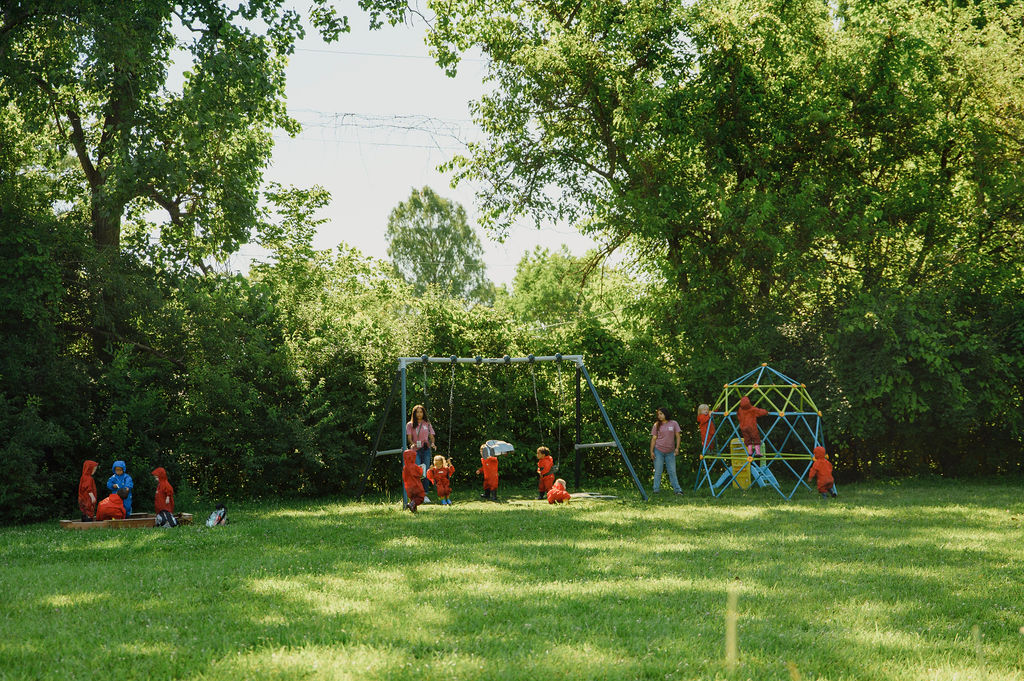
Outdoor learning can include nature walks, creek exploration, gardening, art, sensory activities, movement, group games, observation, and imaginative play. A strong nature-based program treats the outdoors as an extension of the classroom rather than simply a place for recess.
VidaLife’s Learning Beyond the Classroom approach includes a minimum of four hours outside each day when conditions are safe. The school also works toward logging 1,000 hours outdoors through nature exploration, movement, hands-on learning, and seasonal activities.
7. Ask About Screens and Technology
Technology policies can differ widely between programs. If screen-free care is important to your family, ask directly whether televisions, tablets, videos, or educational apps are used during the day.
A screen-free environment gives children more time for:
- Face-to-face conversation
- Creative play
- Physical movement
- Sensory exploration
- Problem-solving
- Music and stories
- Relationship building
- Interaction with the natural world
VidaLife is screen-free. Children spend their days moving, creating, talking, playing, and exploring with their teachers and classmates.
8. Consider Language, Culture, and Values
Children begin forming an understanding of language, relationships, and the world around them from an early age. Consider whether the program reflects the experiences and values you want your child to encounter.
Ask how the school introduces different languages and cultures. Is another language limited to a weekly lesson, or is it included naturally throughout the day? Are children exposed to songs, stories, foods, traditions, and conversations that help them understand a wider world?
Families may also want to ask whether faith-based learning is included and how those values appear in classroom activities.
At VidaLife, children experience English and Spanish through natural interaction with bilingual teachers. Christian learning elements are also woven into the day through Bible stories, relationships, kindness, and opportunities to use their gifts to help others.
9. Review Safety, Provider Information, and Policies
Families should feel comfortable asking direct questions about safety and program operations.
Ask about:
- Teacher training and background checks
- CPR and first aid certifications
- Safe sleep practices for infants
- Cleaning and sanitation procedures
- Allergy policies
- Emergency procedures
- Secure arrival and pick-up practices
- Medication policies
- Outdoor safety
- How incidents are documented and communicated
10. Ask How the Program Communicates With Families
You should not have to wonder how your child is adjusting or whom to contact when you have a question.
Ask:
- How are daily updates shared?
- Can families message teachers directly?
- How are feeding, diapering, and sleep updates handled for infants?
- How are classroom announcements shared?
- How will teachers discuss developmental concerns?
- Are formal assessments completed?
- How often can parents expect photos or activity updates?
- Who should families contact with administrative questions?
VidaLife uses Brightwheel to share reminders, updates, and important information. Families can also use the app to communicate with their child’s teachers and the VidaLife administrative team.
11. Compare Schedules, Tuition, and What Is Included
Do not compare tuition based only on the advertised daily or weekly price. Ask what is included and whether additional fees should be considered.
Questions may include:
- Are snacks included?
- Is lunch provided or available for purchase?
- Are families responsible for classroom supplies?
- Is there a registration fee?
- Are there late pick-up fees?
- Are families charged when the school is closed?
- Can families choose which days their child attends?
- Can the schedule change later?
- Is enrollment subject to classroom availability?
Flexible scheduling can be especially valuable for families who do not need traditional five day care. VidaLife offers two, three, and five day enrollment options based on current classroom availability.
12. Schedule a Tour Before Making Your Decision
Program descriptions and photos are helpful, but an in-person visit gives you information a website cannot.
The federal child care resource ChildCare.gov recommends visiting programs so families can observe the environment, understand a typical day, and see how teachers interact with children.
During your tour, notice:
- Whether you feel welcomed
- How teachers and children interact
- Whether children appear engaged and comfortable
- How the classroom sounds and feels
- Whether activities are appropriate for the children’s ages
- How indoor and outdoor spaces are used
- Whether teachers can clearly explain the daily routine
- Whether the program’s values match what you observe
Bring your questions and take notes. You do not need to make a decision during the tour.
Questions to Ask During an Early Learning Program Tour
Use this checklist when comparing programs:
- What ages do you serve?
- How do you determine classroom placement?
- What is the teacher-to-child ratio?
- What training do teachers receive?
- What does a typical day look like?
- How much time do children spend outside?
- Do children use screens?
- How do you support social and emotional development?
- How are English and Spanish or other languages introduced?
- How do you handle meals and snacks?
- How are naps or quiet time handled?
- How do you approach toilet learning?
- How do teachers communicate with families?
- What schedules are available?
- What is included in tuition?
- What should my child bring?
- How do you help new children adjust?
- What openings are currently available?
Finding the Right Early Learning Program in Indianapolis
The right program should meet your family’s practical needs while giving your child a place to feel safe, connected, curious, and capable.
Pay attention to what the program promises, but also notice what you see and feel. Look for teachers who know their students, routines that balance consistency with exploration, and learning experiences that invite children to participate actively.
VidaLife School provides bilingual, nature-based early learning for infants through five-year-olds in northeast Indianapolis. With screen-free days, hands-on learning stations, meaningful outdoor time, Christian values, and flexible two, three, and five day enrollment options, children are encouraged to explore, lead, and grow.
Schedule a tour of VidaLife School to visit the classrooms, explore the outdoor learning spaces, meet the teachers, and decide whether VidaLife feels right for your family.
Frequently Asked Questions
How early should I begin looking for an early learning program in Indianapolis?
Begin your search as soon as you know you will need care. Classroom availability can vary by age, schedule, and desired start date. Infant openings may be especially limited, so contacting programs early gives you more time to compare your options.
What should I look for during a school tour?
Observe how teachers speak to children, whether children appear comfortable and engaged, how the classrooms are organized, and how indoor and outdoor spaces are used. Ask the teacher or director to explain the daily schedule, communication practices, safety procedures, and learning approach.
What questions should I ask about outdoor learning?
Ask how many hours children spend outside, what outdoor activities include, what weather conditions change the routine, and what clothing or gear families must provide. You should also ask whether learning activities take place outdoors or if outdoor time is primarily unstructured play.
Does an early learning program need to be close to home?
Not necessarily. Consider how the location fits your complete routine. A program near work, a sibling’s school, or your regular commute may be more convenient than the closest option to your home.
Are part-time early learning schedules available in Indianapolis?
Some Indianapolis programs offer part-time options, although schedules and availability vary. VidaLife offers two, three, and five day enrollment options based on current classroom availability.
How do I know if a program is the right fit for my child?
The program should meet your practical needs while making you feel confident about the teachers, routines, environment, and communication. Consider whether your child will be known as an individual and whether the daily experience supports how they learn, move, connect, and grow.
See What Learning Beyond the Classroom Looks Like
Explore our four-acre campus, meet our staff, and see what a day at VidaLife can look like for your child.