

Growing Into the Next Stage With Confidence
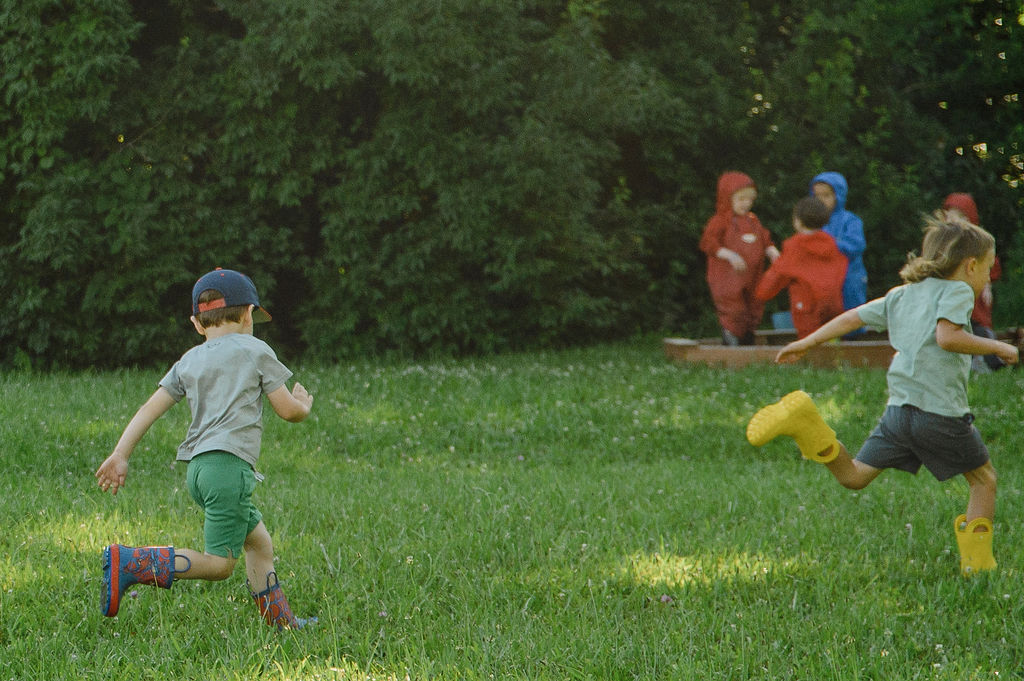
Designed for strong walkers preparing for the Two-Year-Old Classroom, this transitional program introduces more movement, outdoor exploration, learning stations, and independence at a pace that respects each child’s readiness.
A Supportive Step Between Classrooms
Children do not all reach the next stage at the same time. This classroom helps strong walkers gradually move from infant routines into the active rhythm of the Two-Year-Old Classroom.
Teachers introduce learning stations, longer periods of outdoor movement, group routines, and new opportunities to make choices. Transitions are based on developmental readiness, not age alone, so each child can move forward with confidence.
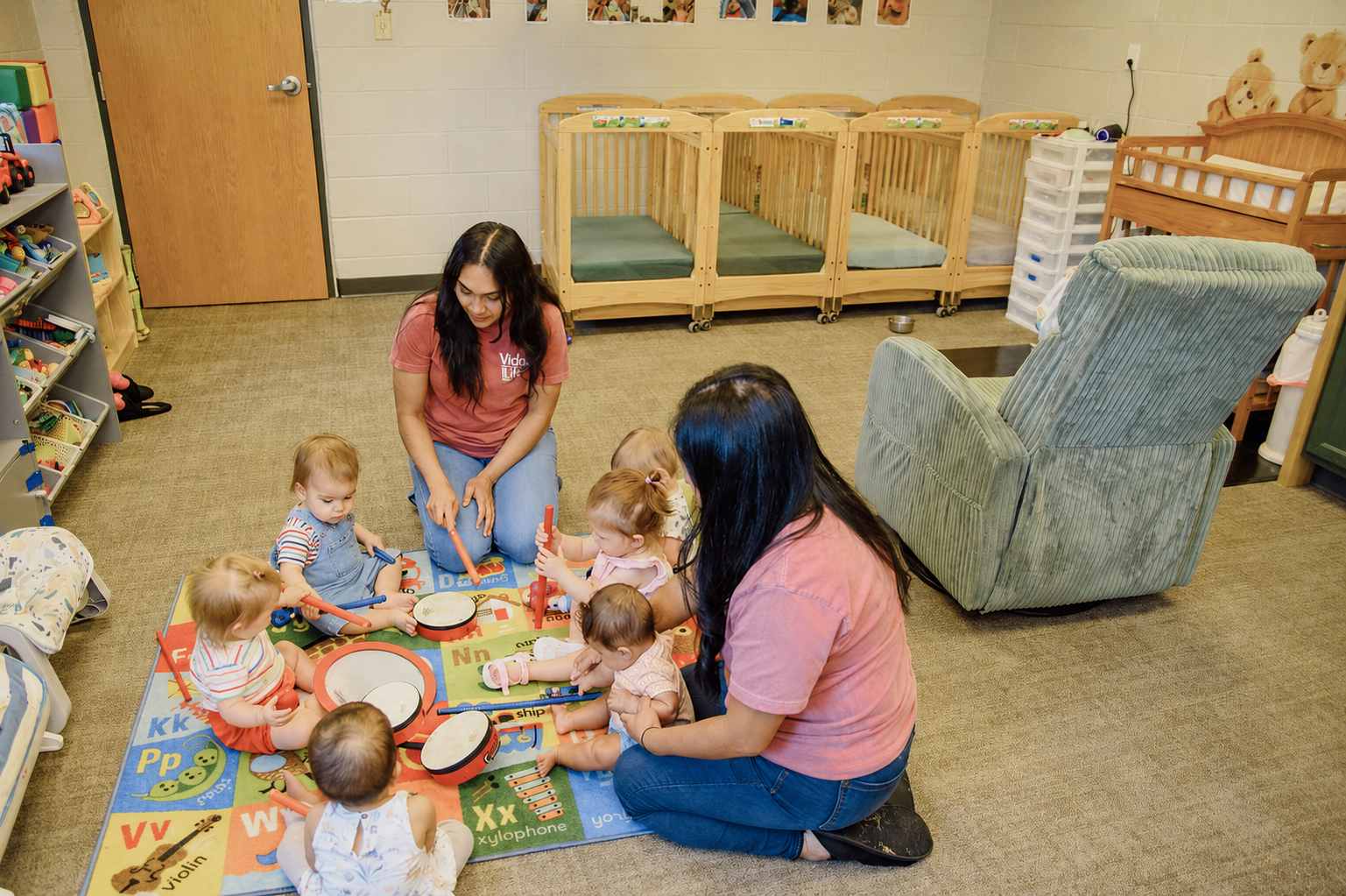
Building Confidence One Step at a Time
Daily routines and hands-on experiences help children strengthen their movement, communication, independence, and comfort within a more active classroom environment.
Confident Movement
Walking, climbing, outdoor exploration, and active play help children strengthen balance, coordination, and confidence in their growing bodies.
Language and Communication
Songs, stories, conversation, and classroom routines introduce new words in English and Spanish while helping children communicate their needs.
Independence and Routines
Children practice making choices, following simple routines, managing belongings, and doing more for themselves with support from their teachers.
Social Connection
Small-group activities help children practice playing alongside others, participating in group moments, and building relationships with teachers and friends.
Choose the Schedule That Works for Your Family
With flexible two, three, and five day enrollment options, families can choose the schedule that works best for them. Tuition is based on the selected classroom and consistent weekly schedule.
Two Days
Three Days
Five Days
What Tuition Includes
Building Confidence One Step at a Time
Daily routines and hands-on experiences help children strengthen their movement, communication, independence, and comfort within a more active classroom environment.
Morning Snack
Children enjoy a morning snack together before transitioning into the day's classroom activities.
Circle Time
Children gather for the hello song in Spanish, a story connected to the weekly theme, and morning learning materials. Circle time may take place outside.
Art Station
Children explore the weekly theme through an age-appropriate art activity that encourages creativity and fine motor development.
Sensory and STEM Station
A hands-on sensory or STEM activity invites children to explore, experiment, and make connections to the weekly theme.
Themed Learning Station
Children practice monthly learning goals through activities focused on early math, letters, shapes, colors, numbers, name writing, alphabet writing, and fine motor skills.
Lunch
Children eat lunch together and practice age-appropriate mealtime routines with support from their teachers.
Movement and Outdoor Exploration
Children build gross motor skills through creek exploration, themed outdoor play, and active movement.
Quiet Time
Children settle in for rest and quiet activities after an active morning.
Afternoon Snack
Children enjoy an afternoon snack together before returning to classroom activities.
Bible Story
Children gather with their teachers for an age-appropriate Bible story.
Indoor or Outdoor Station
Children rotate through an additional learning or play station outdoors when weather allows, with indoor alternatives as needed.
Family Pick-Up
Children enjoy relaxed play and classroom activities as families arrive for pick-up.
FAQs
What schedules are available?
Families can choose from flexible two, three, or five day enrollment options based on current classroom availability.
How will I receive updates?
Educators use Brightwheel to share reminders, updates, and important information with families. Parents can also message educators and VidaLife administrators through the app.
Are meals and snacks provided?
VidaLife provides a healthy morning and afternoon snack. Families may pack a labeled lunch with an ice pack or purchase a school-provided lunch.
How is Spanish introduced?
English and Spanish are introduced naturally through songs, stories, conversations, classroom directions, and everyday routines with bilingual educators.
Do children use screens?
No. VidaLife is screen-free. Children learn through movement, creativity, relationships, sensory experiences, conversation, and outdoor exploration.
Do children go outside in different weather?
Yes. Children explore outdoors in a variety of safe weather conditions. Families should provide weather-appropriate clothing, closed-toe shoes, and labeled rain boots.
Do children spend time outside?
Yes. Outdoor learning is part of the daily routine. Children practice walking outdoors, explore nature, move their bodies, and participate in age-appropriate seasonal activities.
What should my child bring for rest time?
Provide a labeled fitted cot sheet and a small blanket or approved sleep sack for the scheduled afternoon rest period.
What should my child bring?
Bring a labeled backpack, extra clothing, rain boots, a water bottle with a secure non-straw lid, diapers or pull-ups if needed, rest-time bedding, and a lunch if packing from home.
Does my child need to be toilet trained?
No. Children do not need to be toilet trained before joining the Transitional Toddler Classroom. Educators work with families when each child is developmentally ready.
What will my child learn?
Children develop communication, movement, social skills, emotional awareness, independence, and early learning concepts through play and everyday routines.
How do you help children transition from the Infant Classroom?
Educators slowly introduce children to toddler routines, age-appropriate learning stations, group activities, outdoor walking, and increased independence.
How do you decide when a child is ready?
Children typically begin transitioning once they are strong, confident walkers. Placement is based on developmental readiness, classroom routines, and availability rather than age alone.
What is the Transitional Toddler Classroom?
This classroom helps children move gradually from the Infant Classroom into the more active routines of the Two-Year-Old Classroom.
Still have questions?
We’re happy to help. Reach out to learn more about VidaLife, ask about classroom availability, or find the program that feels right for your family.
See What Learning Beyond the Classroom Looks Like
Explore our four-acre campus, meet our staff, and see what a day at VidaLife can look like for your child.