

Curiosity Turns Into New Skills
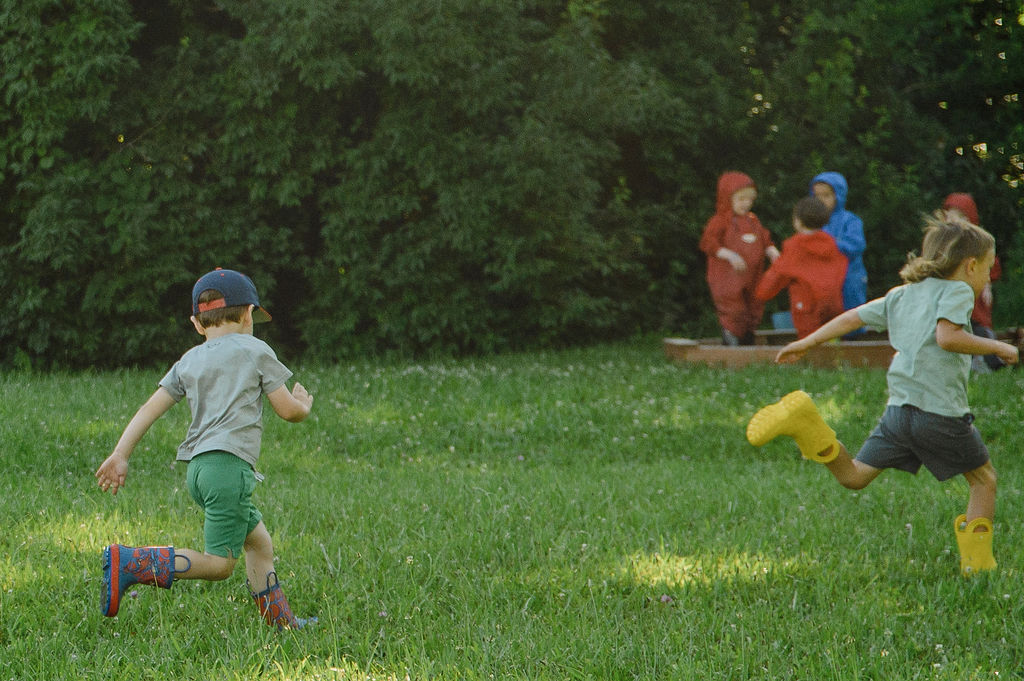
Three-year-olds are ready to ask more questions, try new challenges, and take a more active role in their learning. Through station-based activities, outdoor exploration, English and Spanish, and supportive classroom routines, children build early academic skills without losing the joy of play.
Learning Through Questions, Creativity, and Connection
The Three-Year-Old Classroom gives children more opportunities to explore letters, numbers, shapes, colors, early writing, and problem-solving through movement and hands-on experiences.
Spanish is used more frequently throughout the day, and weekly themes help connect stories, art, sensory play, STEM, and early learning concepts. Show and Tell follows the letter of the week, while teachers support toilet learning, social development, and growing classroom independence.

A Year of Discovery and Growing Independence
Children build early academic foundations while continuing to strengthen communication, social confidence, creativity, and the independence needed for the next stage of learning.
Early Literacy and Writing
Children explore letters, letter sounds, name recognition, storytelling, and early writing through themed activities, books, songs, and Show and Tell.
Math and Problem-Solving
Numbers, shapes, colors, patterns, sorting, STEM activities, and hands-on challenges introduce early mathematical thinking.
Social Development
Children practice sharing, taking turns, working in groups, expressing emotions, and solving small conflicts with guidance from their teachers.
Independence and Self-Care
Classroom routines, toilet learning, personal belongings, and daily responsibilities help children become more confident doing things for themselves.
Choose the Schedule That Works for Your Family
With flexible two, three, and five day enrollment options, families can choose the schedule that works best for them. Tuition is based on the selected classroom and consistent weekly schedule.
Two Days
Three Days
Five Days
What Tuition Includes
A Year of Discovery and Growing Independence
Children build early academic foundations while continuing to strengthen communication, social confidence, creativity, and the independence needed for the next stage of learning.
Morning Snack
Children enjoy a morning snack together while practicing mealtime routines and classroom independence.
Circle Time
Children sing the hello song in Spanish, read a story connected to the weekly theme, and explore morning learning materials. Weekly Show and Tell connects to the letter of the week.
Art Station
Children use different materials and techniques to create art inspired by the weekly theme while strengthening fine motor skills.
Sensory and STEM Station
Sensory and STEM activities encourage children to investigate, experiment, solve problems, and make connections to the weekly theme.
Themed Learning Station
Children build letter and number recognition, early writing, name writing, shape and color knowledge, math skills, and fine motor control through hands-on practice.
Lunch
Children eat lunch together while practicing conversation, independence, and age-appropriate mealtime routines.
Movement and Outdoor Exploration
Children develop strength, balance, coordination, and confidence through creek exploration, themed outdoor play, and active movement.
Quiet Time
Children rest and recharge through sleep or quiet classroom activities.
Afternoon Snack
Children enjoy an afternoon snack and prepare for the final activities of the day.
Bible Story
Children gather for an age-appropriate Bible story and conversation with their teachers.
Indoor or Outdoor Station
Children participate in an additional learning or play station outdoors when weather allows, with indoor options available when needed.
Family Pick-Up
Children enjoy relaxed play and connection with their teachers and classmates as families arrive for pick-up.
FAQs
What schedules are available?
Families can choose from two, three, or five day enrollment options based on current classroom availability.
How will I receive updates?
Teachers use Brightwheel to share reminders, updates, and important information with families.
How do teachers track my child's development?
Teachers observe children throughout their daily activities and complete assessments twice each year to document growth and identify areas where additional encouragement may be helpful.
Are meals and snacks provided?
VidaLife provides two healthy snacks each day, one in the morning and one in the afternoon. Families may pack a lunch or purchase a school-provided lunch when lunch service is available.
Do three-year-olds take a nap?
Children have a scheduled nap or quiet period each afternoon. Families should provide a labeled fitted cot sheet and a small blanket. If you prefer that your child not sleep, teachers can provide an alternative quiet activity.
What happens during learning stations?
Children rotate through art, sensory play, STEM, early literacy, number concepts, and focused learning experiences connected to the classroom's current theme.
How much time do children spend outside?
Outdoor learning is part of the regular routine. Children explore nature, move their bodies, play with friends, and participate in seasonal activities throughout the year.
How are English and Spanish included?
Children experience both languages through songs, stories, conversations, classroom routines, and guided activities with bilingual teachers.
Do children use screens?
No. VidaLife provides a screen-free environment where children learn through movement, play, creativity, conversation, and interaction with others.
Does my child need to be toilet trained?
No. Teachers work with families to support children who are still learning to use the toilet. Please send clothing that is easy for your child to manage independently.
How do you support social development?
Teachers help children practice sharing, taking turns, joining group activities, expressing emotions, using kind words, and working through small conflicts.
What will my three-year-old learn?
Children explore letters, numbers, shapes, colors, patterns, communication, creativity, social skills, and independence through play, movement, and hands-on activities.
Still have questions?
We’re happy to help. Reach out to learn more about VidaLife, ask about classroom availability, or find the program that feels right for your family.
See What Learning Beyond the Classroom Looks Like
Explore our four-acre campus, meet our staff, and see what a day at VidaLife can look like for your child.